
Katie Hedrich 🇺🇸 — The Comeback Queen of Boise
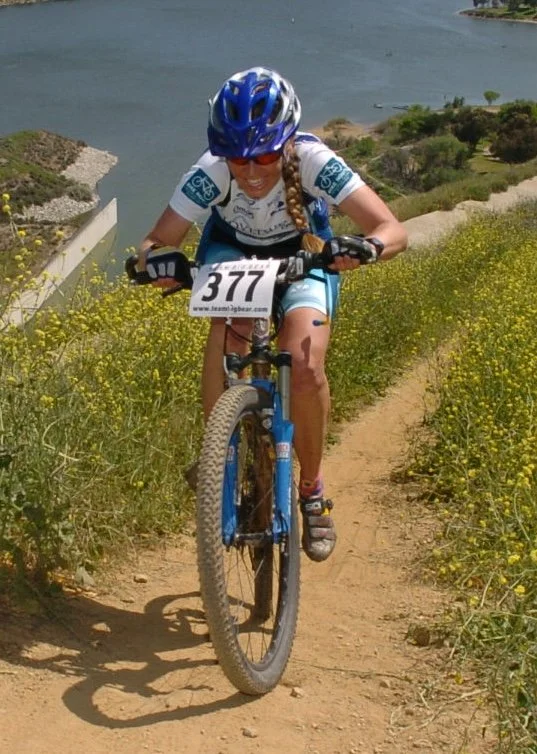
If you’re looking for a neat, linear origin story… Katie Hedrich didn’t get the memo.
Katie’s journey is the kind that zig-zags through ski towns, film sets, forest fires, hospital corridors, and finally into a garage in Boise, Idaho where two bikes sit side-by-side, monitors glow like mission control, and racing happens only when the household schedule says it’s legal.
She’s tenacious by her own definition. But the longer you sit with her story, the word starts to feel too small.
No soundtrack. No coffee. All grit.
Katie lives in Boise (Mountain Time), races mid-to-late morning for the “better fields,” and does it with the rarest modern performance enhancer: silence. No hype playlist. No pre-race espresso ritual. When she’s riding easy she’ll think or cue up a book for long Zone 2. When she races, it’s “100% focus,” the same way she raced outdoors: no music, no noise, no distractions. Just the race, the team, and the moment.
Her setup is also peak SISU practicality: a Wahoo Fitness KICKR Core with her real-world Masi Bicycles road bike on the trainer because she likes the feel of a real bike and never clicked with Zwift shifting. The “pain cave” is a shared garage command center with her husband Tony: bikes aligned, big monitors, extra computers ready to record. It takes up “a good portion of our garage,” which in SISU terms translates to: this is not a hobby, it’s a lifestyle decision.
From Wisconsin roads to Warren Miller timelines
Katie started riding in rural Wisconsin in the early 80s - back when junior pathways were basically “good luck, kid.” She bought a Trek when they were still made in Wisconsin and trained by mimicking what she’d seen at road races, because there was no local racing scene for her to plug into. She still wishes programs like NICA existed back then.
Then her life took a left turn into film production - studying at UW–Wisconsin, then landing in Sun Valley, Idaho, where “one year turned into four” in ski bum economics that no longer exist. From there: editing Warren Miller Entertainmentski films, documentaries, commercials… and mountain biking as the in between chapters.
Eventually she chose southern California feature film work, found a group ride scene, and in 1995 someone told her after a long climb in the Santa Monica mountains she should race.
She did. And like so many SISU people, once the fuse was lit, it stayed lit.
Obstacles didn’t stop the story. They became the story.
Katie trained for MTB racing while working brutal film industry hours - 4:30am starts because it was the only time available. She lived between worlds: a mountain town home in Idyllwild, and a motorhome in the city during productions so she could ride places like Griffith Park and the Rose Bowl before work. That’s not just dedication that’s logistics as devotion.
And then came the hard chapters:
A severe head injury at age 12, with doctors telling her mountain biking wasn’t a great idea (she did it anyway).
Lyme disease that knocked her out for two years and ten months on heavy antibiotics before she ultimately took a different path and rebuilt herself back from four-mile rides that felt like marathons.
A comeback year that reads like a highlight reel: national and state titles, series wins, and a 24-hour team championship.
A devastating crash that ended IRL racing: SI joint damage, rib cartilage torn, unable to walk for a time - eventually retiring as a Cat 1, successful but forced to stop doing the thing she loved most.
Here’s the twist: when Katie couldn’t race, she refused to disappear.
If she couldn’t race… she built the start line.
In 2005, Katie created the Idyllwild Spring Challenge mountain bike race. Within a year it became a National Qualifier and drew big names. She captained a team, taught beginner MTB classes for women (from young girls to brand new riders), and became the kind of leader who makes the sport bigger than herself.
Then two major forest fires years apart burned the course in halves. She worked with the Forest Service, formed an IMBA chapter, waited, rebuilt, and watched it burn again.
That would be a reasonable endpoint for most people.
Katie treated it like a pivot.
OmniGo! Events, Tony, and the business built on grit
Katie asked herself a simple question: what do I love enough to start over for?
Answer: supporting competition.
She turned the timing software she’d built for her race into a real company - OmniGo! She moved to Boise. To scale it, she needed a serious programmer. Enter Tony: elite ex-pro road cyclist, high end dev skills, and (eventually) her partner in work and life.
Together they built a successful event timing business across the U.S. - working alongside notables like Dave Towle and Frankie Andreu. And while the business grew, Katie was still fighting the behind-the-scenes battles: endometriosis and surgery, Hashimoto’s and the long road of recovery, years of unexplained pain that turned out to be rupturing ovarian tumors and gallbladder tumors - thankfully benign.
Six years later, in 2022, her thyroid levels finally tested normal.
She was “overjoyed.”
And then Tony introduced her to Zwift.
Zwift didn’t just bring racing back. It brought her back.
For Katie, Zwift wasn’t a cute winter training tool. It was the doorway back to competition after 23 years.
She jumped into Tour de Zwift rides and found herself instinctively wanting the front. She won most of the women’s only rides she entered, signed up for ZwiftPower mid-tour, and the old racer brain fully reawakened. She joined an all women’s team (BBB), later helped form Amicis after BBB disbanded, and ultimately found her way into SISU because Tony already had ties in the community.
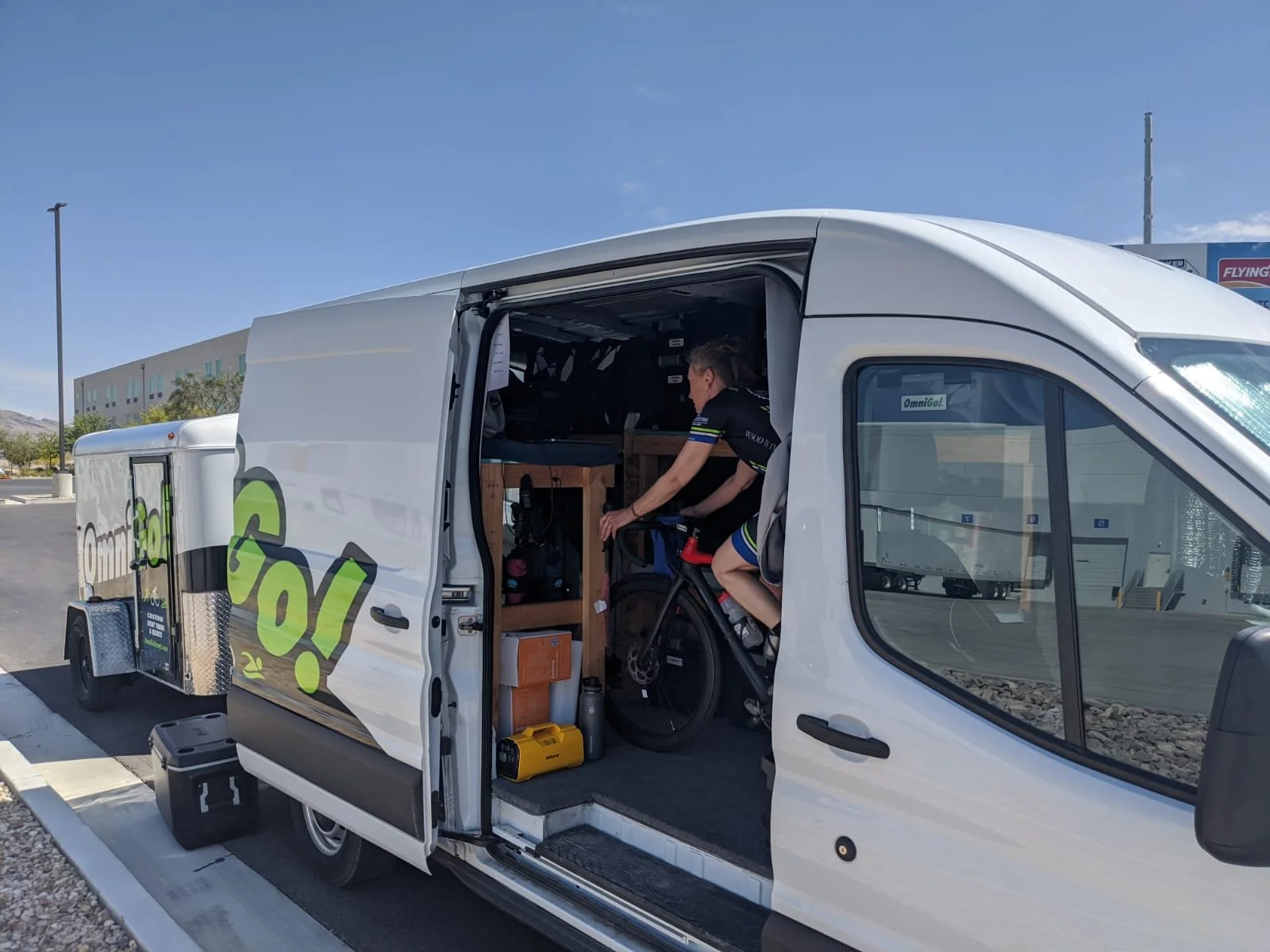
The best detail? Katie raced everywhere: hotel rooms, different states, even from their work van.
Pull over at a rest stop. Bike on trainer. Race. Back in the van.
If that doesn’t scream SISU, nothing does.
Her proudest moment isn’t the titles
Katie won titles. She built events. She built a business.
But her proudest cycling moment - the one she returns to was a 12-mile race after Lyme disease. She suffered, didn’t place well, and cried tears of joy the whole time because it meant she was coming back.
That’s the heartbeat of her story: not winning, but returning.
Captain of Piekana — and a loud, honest call for more women on the start line
Katie currently captains SISU’s ZRL Piekana squad and loves the role - while being candid about the challenge: women’s participation is still too small, which makes squads fragile and upgrade pathways harder. Her take is direct and useful: it’s not that women can’t thrive in open racing spaces - she felt welcomed immediately but that many women are intimidated by male dominant fields and the ecosystem still doesn’t offer enough quality women’s events that consistently draw participation.
Her biggest “next season” idea is pure Katie: attach SISU’s name to something exceptional - a women’s tour/series that becomes a magnet, a reason to show up, a banner people can rally under. She and Ann have already started brainstorming, exploring outreach channels, and even scouting women’s cycling podcasts for promotion.
And if you’re wondering who has most influenced her? She doesn’t hesitate: Tony, her DS, strategist, and “angel,” whose support is as practical as it is emotional. He’s also become embraced by the women’s squad, proof that when the intent is right, support is support - full stop.
The SISU twist: strategist brain, relay dreams, and a 24-hour idea
Katie is the person who, if you invite her to a relay, immediately says: “Put me on strategy… and also let me race.” She’s done it before, she’s proud of the winning plan she built, and she’s already thinking bigger: a 12 or 24-hour Zwift relay format that would finally let globally distributed teams flex.
That’s classic SISU energy: if the format doesn’t exist yet, start imagining it loudly until it does.
“Never give up” — and redefining what that means
Katie’s most important mindset shift is one that hits harder because she’s earned it: never give up - but also learn that resting isn’t quitting. If you need a break, healing time, or a breath to regain momentum, that’s not failure. That’s the work.
It’s the kind of wisdom that doesn’t come from a motivational poster. It comes from living through fire seasons, ER visits, careers rebuilt, and the long, stubborn act of returning to the start line.
SISU Racing is…
In Katie’s words: a team she’s proud to be part of - organised, international, built on teamwork, and aligned with the true meaning of SISU: extraordinary determination, resilience, courage, and the ability to act when reserves are spent.
And if you’re wondering what Katie Hedrich really represents inside SISU Racing?
She’s proof that the comeback isn’t a moment.
It’s a practice.