
JEREMIAH B: From the Basement to the Flint Hills 🇺🇸
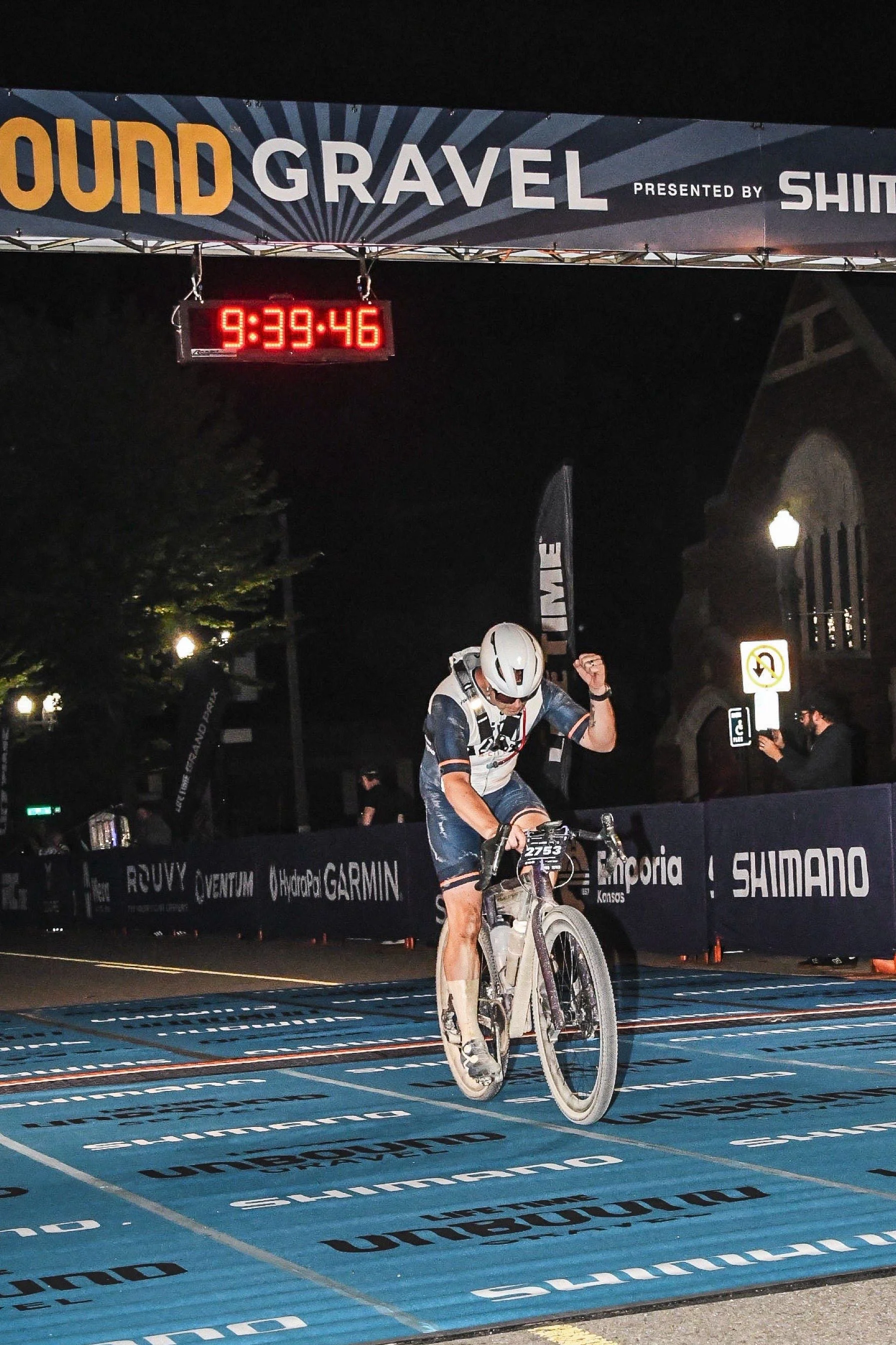
Jeremiah B’s SISU story is built on grit, smart systems, and the courage to keep showing up.
From northern Virginia, USA, Jeremiah B doesn’t just ride with SISU Racing - he lives the mindset behind it. His story isn’t a straight line to performance. It’s a rebuild. A health wake-up call. A decision to stack the deck in his favour. And then, day after day, the steady work that turned “I hope I can” into “I belong here.”
A pain cave that’s basically mission control
Jeremiah’s basement isn’t just where he trains, it’s where he’s engineered consistency.
Two bikes (his wife Zwifts too). Four TV screens. Each bike gets a dedicated Zwift screen up top and an entertainment screen below. And then the part that makes every SISU tech nerd smile: automation.
When he starts an activity in Zwift, smart lights shift to red and dim down. Fans kick in automatically when his heart rate hits a certain point and stays there for three minutes. They power down 30 minutes after his session ends. It’s equal parts clever, practical, and peak Jeremia - right down to the frantic mid-interval texts asking his wife to turn the fans up because he forgot. (We’ve all had a version of that moment. His just comes with smart switches and comedy timing.)
Soundtrack? It depends:
Long base rides: audiobooks, movies, TV series
Standard intervals: music - his “likes” playlist or random EDM
VO₂ max misery: silence. When it gets that hard, extra stimulation becomes too much. He turns everything off and focuses on breathing, heart rate, and surviving the set.
Coffee is a “before” thing, especially for early rides. Racing, though? Jeremiah’s a proud night owl. Up at 5am for work is one thing. 3:30am Zwift starts? Not happening.
A rider still discovering his “type”
Ask Jeremiah what kind of rider he is and he’ll tell you the truth: he’s still figuring it out. He found cycling later in life and feels like he should’ve been doing it all along. He doesn’t claim a neat label - sprinter, climber, puncheur. Instead: all-rounder, learning, evolving, and quietly competitive.
That “quietly competitive” part matters. It’s the thread that runs through everything that comes next.
The diagnosis that changed everything
In his mid-40s, Jeremiah started feeling heart flutters. Tests revealed two major discoveries: Hashimoto’s thyroiditis and by chance an aortic aneurysm at the root of his aorta. That second finding, caught through an ultrasound ordered for something else, may have saved his life.
An aneurysm is serious. It’s monitored closely, it comes with strict limitations, and it can require open chest surgery in the future. Jeremiah couldn’t lift weights or heavy objects. But he could cycle.
At the time, he wasn’t a cyclist. Middle age and work had done what they do: fitness had slipped, weight had climbed, and health felt fragile. So he made a decision—one that defines his story:
If surgery was potentially in his future, he wanted to walk toward it as strong as possible.
And that’s where his SISU started - long before he ever wore the kit.
The year he proved something to himself
His first move wasn’t a road bike. It was a Peloton. (Jeremiah tells this with a grin, and honestly, it fits.) He set a goal: ride every day for a year.
Some days were 10 minutes. Others were 60. But the point wasn’t perfection - it was identity. He became the person who shows up.
Fitness rose. Weight dropped. Motivation grew. And then the idea of racing began to tug at him.
Gravel: the gateway to a new life
Traffic heavy road riding didn’t appeal. But gravel did - especially after a YouTube rabbit hole that started with Lachlan Morton and the legends of Dirty Kanza/Unbound, Leadville, and a whole world of endurance storytelling.
Jeremiah bought a Trek Checkpoint gravel bike and discovered an outdoor training ground of “hundreds of miles of centuries old gravel roads” just across the border. Weekdays: trainer. Weekends: gravel. And soon, it became a family thing - bikes for his wife and two sons, rides together when life allowed.
He started racing: learning pacing, fueling, hydration - sometimes the hard way. (Tubeless sealant not sealing, tyre plug initiation rites… welcome to gravel.)
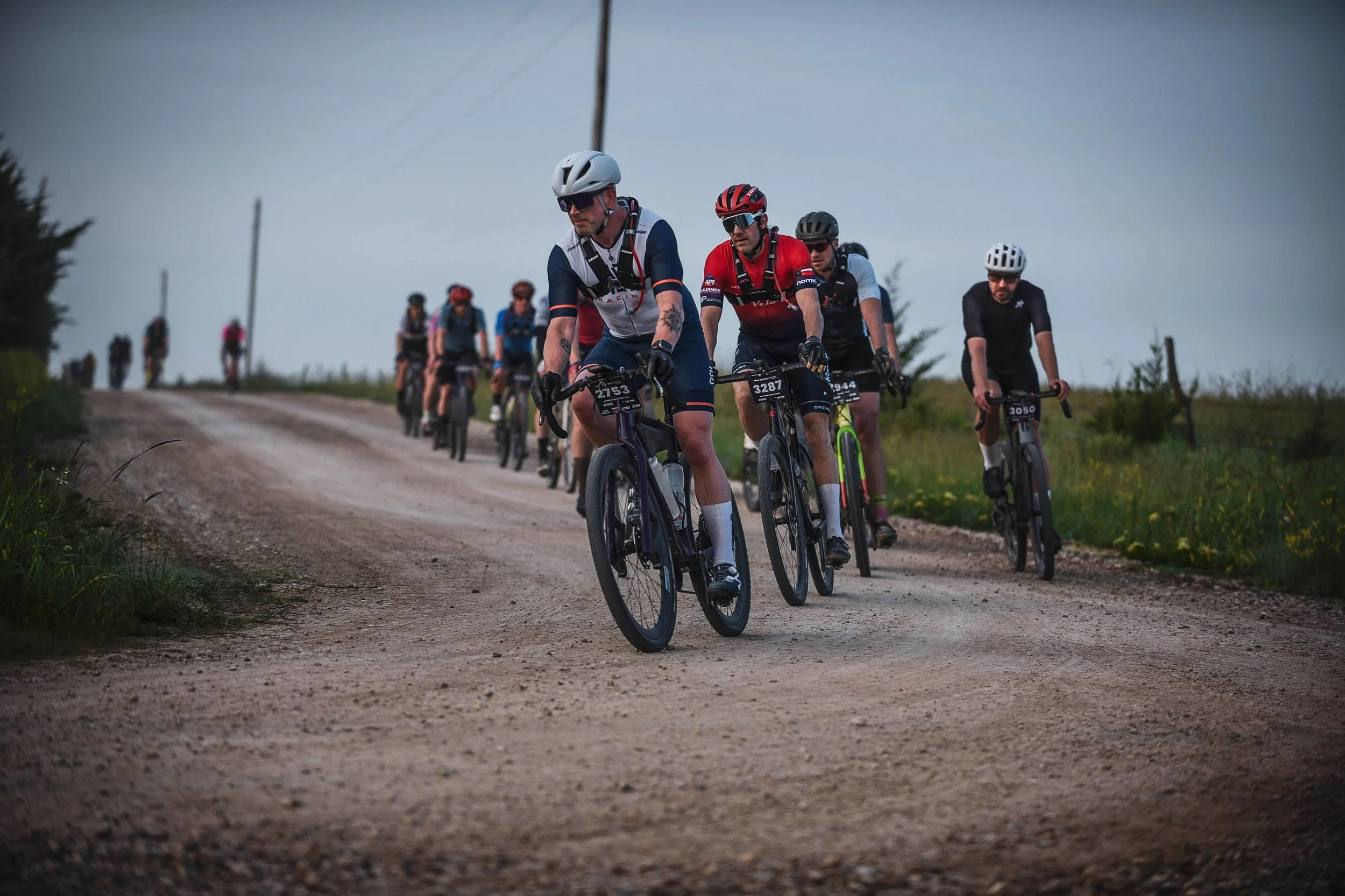
Zwift, ZRL, and finding SISU
In winter 2022, Jeremiah’s name was drawn for Unbound 200. Four months to prepare. He sold the Peloton, bought a Wahoo KICKR, and joined Zwift to train.
But Zwift wasn’t just training - it became community, competition, and belonging. By fall 2023, he discovered ZRL, started reading about teams, and kept seeing SISU riders. He looked SISU up. Read about the meaning of SISU. And that was it.
Because Jeremiah didn’t just like the concept = he recognised it.
His first season with SISU Racing Kurki was everything he hoped for: welcoming teammates, support, shared suffering, and the pride of racing for something bigger than yourself. When he found out he could buy an IRL SISU jersey, he didn’t hesitate.
And the transformation? It’s not subtle:
Weight down from 220 lbs to 185 lbs
Resting heart rate now typically 48–50 bpm
Structured training week after week
And one weekly SISU race/event he looks forward to like a holiday
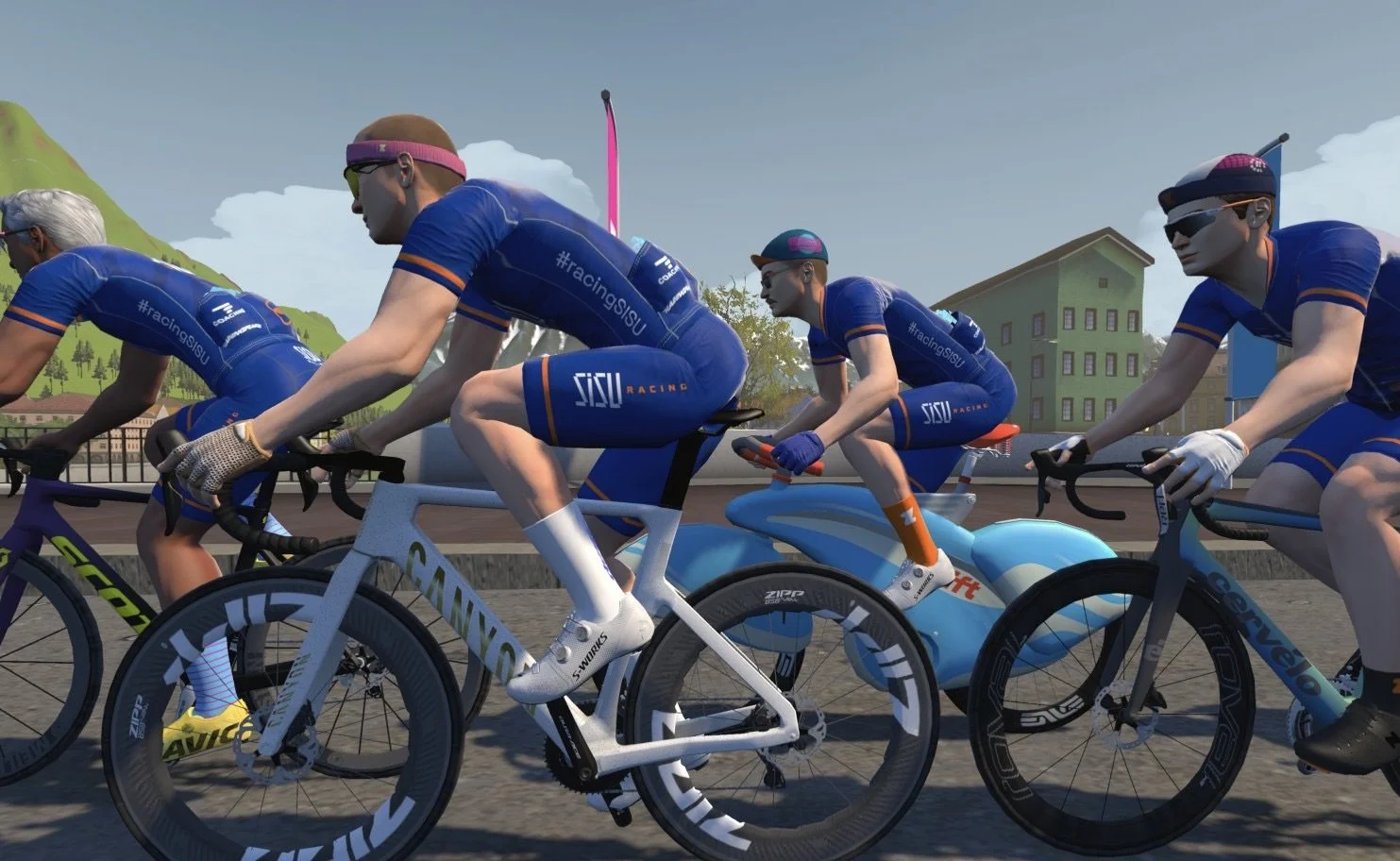
Unbound 200: the moment the story turned
Jeremiah’s proudest moment is Unbound 200 in 2025 - because it took three chapters to earn.
2022: not ready, didn’t finish
2023: stronger, but a brutal muddy year and cutoffs ended the attempt early
2025: a different Jeremiah - trained, coached, confident, prepared to belong on the start line
One of the biggest breakthroughs wasn’t physical. It was a self admission: he wasn’t good at coaching himself. He’s a DIY guy by nature, but his time was limited and his goals were huge. So he hired a coach: Kristen Legan (Rambleur Coaching).
She built structure around his work schedule. Incorporated ZRL into his plan. Helped sharpen strategy. And without pep talks helped him build confidence by pointing to evidence: “You’ve already done this power in training. Go look.”
By race day, Jeremiah wasn’t hoping. He was ready.
The ride itself wasn’t clean. There were cramps so violent he nearly collapsed onto the top tube. A low point where old failures came back to whisper familiar doubts. Hydration issues. A forgotten headlight (because aero, obviously). And then, late in the race, the wall of fatigue that makes everything feel impossible.
But he kept going.
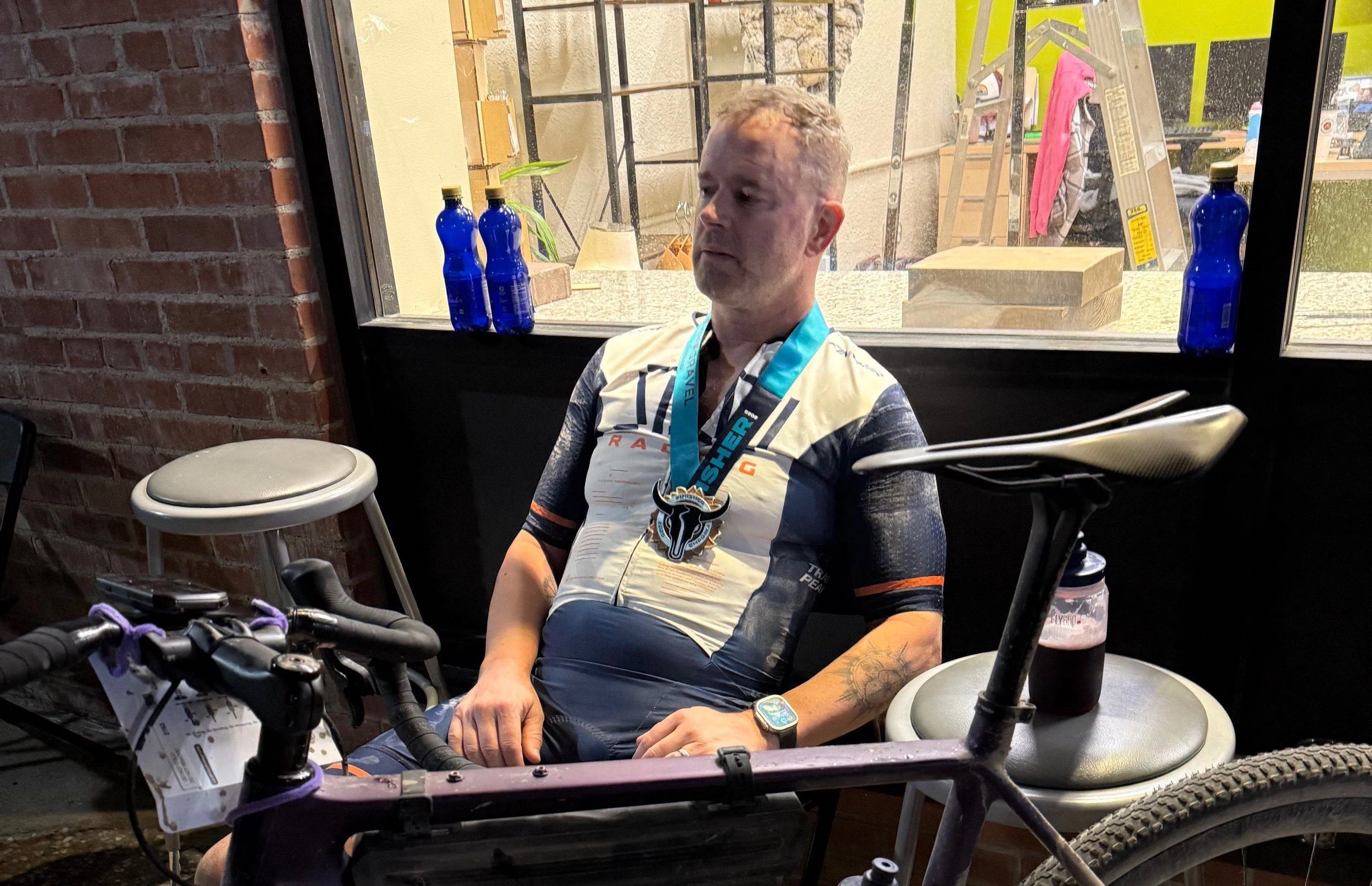
He finished Unbound 200 in 15 hours and 9 minutes, crossing the line at 9:39pm — exhausted, proud, and already thinking, now I want to do it faster.
That’s the SISU loop: survive it, learn from it, return stronger.
The mindset that carries everything
When motivation dips, Jeremiah doesn’t negotiate with it. He simplifies the barrier:
“All I have to do is go down into my basement and get started.”
That’s his trick. Start the motion. Once it begins, the commitment locks in.
His advice to anyone facing a long term setback is pure Jeremiah:
Don’t obsess over the far end of the journey
Focus on intermediate goals
Believe in the process
And above all: keep showing up
Because those “just get through today” days? They add up.
Captain Kurki, community builder
This season Jeremiah is the captain of SISU Racing Kurki, one of the team’s original ZRL squads. He’s honoured, he takes it seriously, and he genuinely enjoys helping others chase their goals - fitness, racing, and belonging.
He also co-leads a weekly SISU Endurance Ride with Tim Brown, because for Jeremiah, involvement isn’t a badge - it’s an action.
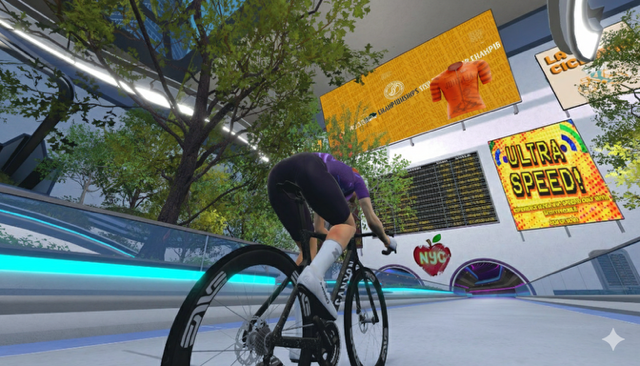
When the crew rode Fuhgeddaboudit (New York). the upcoming Club Champs road race route, Jeremiah called it a “banger,” and you can hear the excitement in his analysis: fast starts, sharp attacks, multiple chase groups, and the New York KOM as a selection point. The big question: do the chasers reconnect after the KOM, or does the race splinter for good? Jeremiah can’t wait to find out.
Racing beyond Zwift
IRL, Jeremiah gravitates toward ultra endurance. The distance isn’t the point. It’s what the distance demands: mental toughness, execution, fueling, hydration, and the ability to keep moving when everything hurts.
To non-cyclists, 200 miles seems impossible. To Jeremiah, that’s exactly why it matters.
2026: a build year with battles everywhere
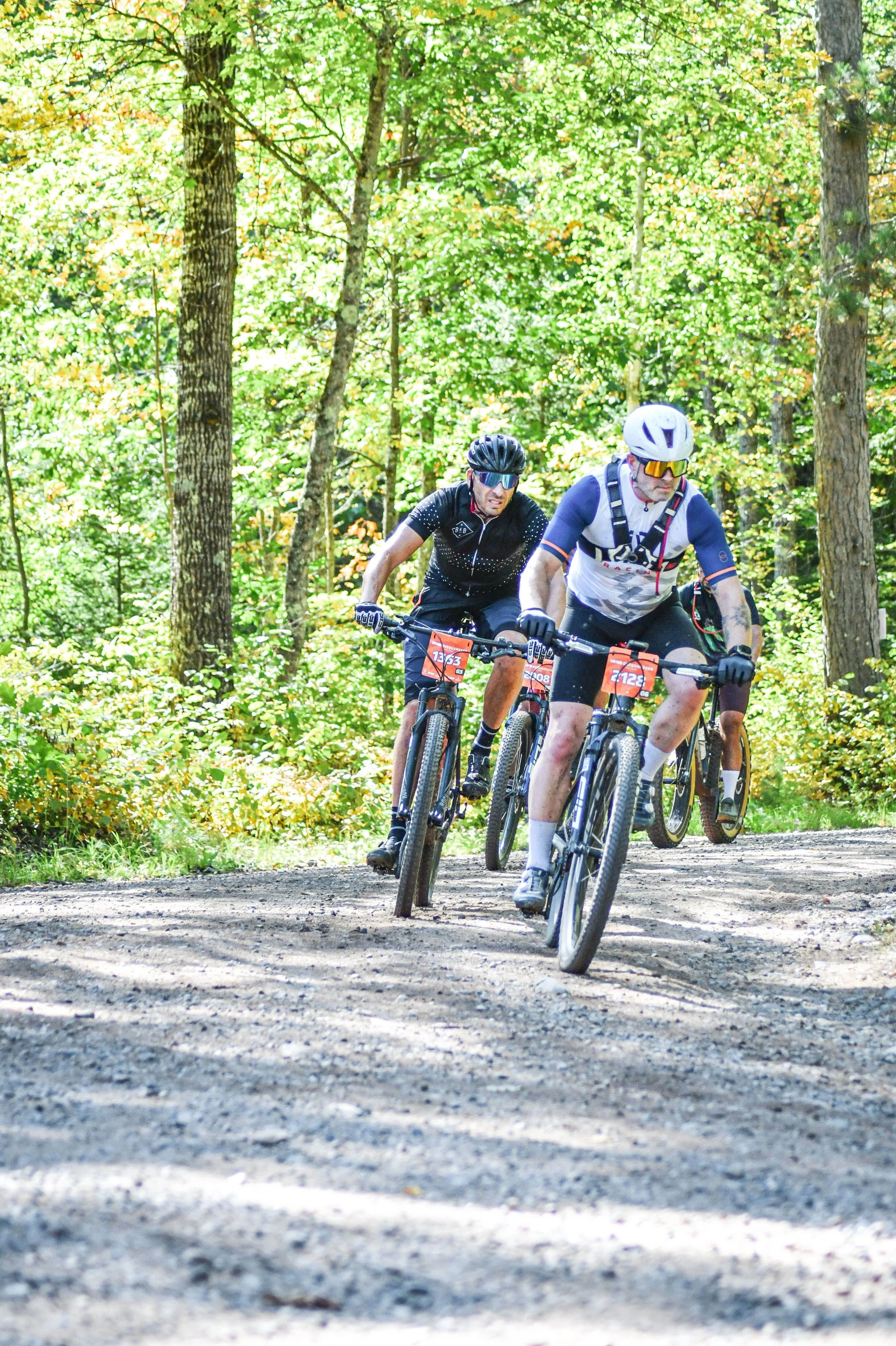
Jeremiah is skipping Unbound in 2026, using it as a year to stack racing experience: 60–100 mile events, a West Virginia points series, and a big focus on Chequamegon (Wisconsin) — a punchy 40-mile MTB race.
Last year he started deep (Gate 6), was 1008th at the first timing mat, and clawed his way to 543rd. That result earns him a Gate 3 start this year - closer to the pointy end, where the racing gets real.
He’s excited. And of course, he’ll be in SISU kit.
The moments that make SISU feel small world
One of Jeremiah’s favourite quirky SISU moments happened in a real life paceline at the Croatan Buck Fifty. Rotations. Elbow wags. Shared work. And then: he meets SISU rider Lee Ragsdale in that line.
Suddenly it’s a SISU TTT… in real life.
He’s also had riders shout “SISU!” when they recognize the kit mid-race. That’s what happens when a team becomes visible - not just online, but in the culture of the sport.
SISU Racing is…
Jeremiah finishes it simply:
“…something that I am proud to represent.”
And when you look at his health scare to daily Peloton commitment, gravel discovery to ZRL belonging, Unbound failures to Unbound finish - you understand why.
Jeremiah’s story is proof that SISU isn’t a slogan. It’s a practice.
Start. Show up. Keep going. Learn. Return stronger.